

Whatnot Fee Calculator

Keep selling after the livestream
Crosslist to 10+ marketplaces with Vendoo and keep your inventory moving.








How Does the Whatnot Fee Calculator Work?
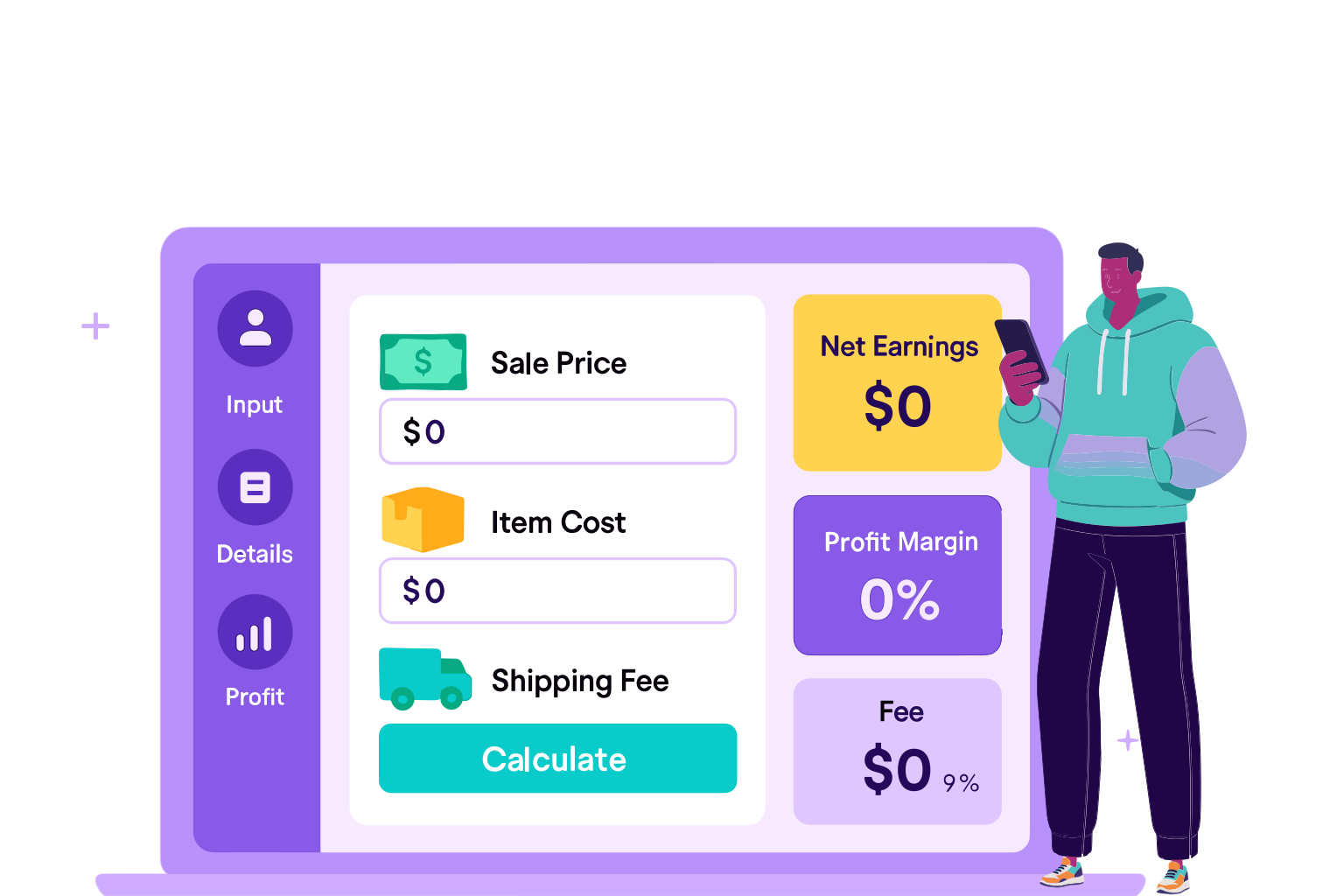
Vendoo’s Whatnot Fee Calculator is designed to give sellers an instant, accurate breakdown of their expected fees and net profit when selling on Whatnot. It mirrors Whatnot’s fee structure and pulls in all costs that impact your payout, including marketplace fees, payment processing fees, item cost, and shipping cost.
Vendoo’s Depop Fee Calculator is built to give sellers a fast and accurate estimate of what they’ll actually earn from a sale. Instead of doing the math yourself or relying on rough guesses, the calculator uses Depop’s current 2026 fee structure.
Once you enter your details, the Whatnot calculator does the math for you automatically, showing your total fees, net earnings, profit, and profit margin. This makes it a reliable tool for Whatnot sellers who need accurate estimates while prepping inventory.
You don’t need to know the formulas or guess how shipping discounts or lower bids impact your bottom line because the calculator shows you everything instantly.
Here’s how to use the Whatnot fee calculator:
1. Enter your email to unlock the calculator:
2. Select your country and category
3. Enter your item price (buy it now price or estimated final bid)
4. Enter your item cost (what you paid for the item)
5. Enter the shipping charge the buyer will pay
6. Enter the shipping cost to you
7. Results will automatically appear!
Within seconds, you’ll see:
- Total Whatnot fees
- Your Earnings
- Your Profit
- Profit margin
This lets you quickly test different price points, starting bids, shipping strategies, and promotions before you go live, so you can ensure every item you sell is priced for profit.
Benefits of Using the Whatnot Fee Calculator
As a seller, you know that when you sell on Whatnot, things move fast. Prices change by the second, and it’s easy to lose track of what you’re actually earning after fees and shipping. Vendoo’s Whatnot Fees Calculator gives you a clear picture before you even go live, so you can price confidently and avoid surprises when your payout arrives.
Below are the benefits sellers get from using the calculator, and why it’s a trusted tool for Depop creators who want accurate fee and profit calculations.
Reflects Whatnot’s unique live-auction fee structure
Whatnot isn’t a traditional marketplace with fixed prices. Although you can list fixed price items in your shop, most sellers opt for auction-style selling. Fees are taken from the final bid, and small swings in that bid can change your margins more than you expect. The calculator is set up with Whatnot’s current fees, so when you plug in your item price, it gives you an accurate estimate based on the platform’s structure. No guessing!
Helps streamers price starting bids wisely
Starting bids can make or break a live show. While low bids bring an audience, if you set them too low, you risk ending up with a sale that barely covers your costs. The Whatnot calculator lets you test different starting points and see how they affect your net earnings. It’s a quick way to find that sweet spot where buyers engage, and you still make a solid profit.
Shows the impact of discounted shipping or freebies
Many sellers offer reduced shipping or toss in extras to encourage more bids. These strategies help build loyal buyers, but they also affect your margins. When you enter your actual shipping cost, the calculator shows you right away how those choices can change your bottom line. This makes it easier to run promos without accidentally cutting too deep.
Helps avoid profit loss from low bids
Live auctions can be unpredictable. A slow crowd, a late show, or a niche item can end lower than you expect. Running your item through the calculator helps you understand the lowest bid you can accept while still making a profit. It’s a simple way to protect your margins and make informed decisions for your next live show.
Perfect for high-volume sellers who need fast estimates
If you run regular shows or list a high number of items, it can be time-consuming to crunch numbers for each one. The calculator gives you instant results, which makes inventory prep faster and way more accurate. You get clear fees, net earnings, and profit margins in seconds, even when you’re batching dozens of items.
Whatnot Fees Explained
Understanding Whatnot’s fees makes it much easier to price your items and know what you’ll actually take home. The good news is that Whatnot’s fee structure is pretty straightforward.
Here's how it works:
Marketplace Fee
Whatnot charges a commission on every sale. For most categories, it’s 8% of the item’s sale price, but some categories have lower rates, like coins at 4% and electronics at 5%. In a few categories (comics/anime, toys, trading cards, and sports singles), Whatnot only charges commission on the first $1,500 of a sale. Anything above that commission cap is free of marketplace fees.
Payment Processing Fee
On top of the commission, there’s a standard payment processing fee that’s common with any marketplace that collects money on your behalf. It comes out to 2.9% of the entire order value plus 30 cents.In this case, the “order value” includes the item price, the shipping charge, and any taxes the buyer pays. This fee is automatically deducted from your payout.
Shipping and Shipping Promos
Most of the time, the buyer pays for shipping, and Whatnot generates the label for them. However, if you choose to offer free or discounted shipping, or if an item ends up costing more to ship because of an inaccurate weight, those extra shipping costs come out of your profit.
One thing to remember: the payment processing fee is calculated based on the entire order value, which includes shipping. So, higher shipping costs (even when the buyer pays them) will slightly increase the processing fee.
Live Auctions, Bids, and Bundles
Live auctions on Whatnot use the same fee structure as regular Buy-It-Now sales. Your fees are based on the final winning bid and the total order value. When a buyer wins multiple items during your live show, Whatnot’s Bundling system combines them into one order whenever possible, and your fees are calculated on that combined total.
Another thing that can happen during live auctions is tipping. Tips are not considered part of the sale, and Whatnot does not charge any fees on tips, so you keep 100%!

Detailed Fee Tables
Commission and Processing Fees by Category
Since Whatnot’s fees vary depending on category, the table below shows you all the commission and processing fees based on category.
Shipping Tiers
Shipping costs on Whatnot depend on the item’s weight, size, and category. Here’s a simplified overview to help sellers understand the most common shipping tiers buyers will see. Actual rates may vary depending on USPS zone and packaging.
Bundling Shipping Rules
Smart Bundling is Whatnot’s way of keeping shipping costs lower for buyers while making the shipping process easier for sellers. Instead of charging separate shipping for every item a buyer wins, Whatnot automatically tries to combine those items into one shipment.
Let’s say your item cost was $4 and you’re using Depop’s shipping methods. Plug that info into the calculator, and you’ll get:
Here’s how it works:
1. The buyer pays full shipping on their first item
That first item sets the base shipping cost. Everything after that depends on weight, size, and shipping profile.
2. Additional items add a small amount of weight
Each extra item has a “shipping profile weight” that gets added to the bundle. This usually increases shipping only slightly compared to separate labels.
3. Whatnot picks the cheapest shipping option
It looks at the combined weight and dimensions and chooses the most cost-effective method available for that bundle. Buyers typically benefit the most here because bundling keeps their total shipping costs lower.
4. If the bundle gets too heavy or oversized, Whatnot may split it
Some orders are more efficient as two packages rather than one big one. When that happens, Smart Bundling will create multiple shipments automatically.
Understanding how Depop’s fees work makes it much easier to price confidently and protect your profit, especially when shipping and processing costs can vary from sale to sale. Once you break everything down, you can clearly see what you’ll take home from each order.
Use the calculator to plug in your own numbers, adjust for different item types, and make informed pricing decisions that keep your shop profitable as you grow.
Example Profit Calculation
To show how much the final bid affects your earnings on Whatnot, here’s a simple example using an auction-style item.
Example item: Graphic T-Shirt
- Item cost: $2
- Buyer shipping: $5
- Your shipping cost: $0
- Commission: 8%
- Processing: 2.9% of (item price + $5) + $0.30
Now let’s look at how your profit changes at different final bids.
While Whatnot’s fees can look confusing at first, the structure is actually pretty simple. Your main costs come from the commission and payment processing fees, and shipping is usually covered unless you choose to offer a discount or free shipping.
Understanding how fees work also helps you set smarter starting prices, avoid underpriced auctions, and build a sustainable reselling strategy. Whether you’re selling casually or running regular shows, Whatnot can be a fun and profitable selling platform.